Endodontic Retreatment in Baltimore, Lutherville-Timonium & Bel Air, MD
What Is Endodontic Retreatment?
Endodontic retreatment is a procedure used to treat a tooth that previously had root canal therapy but did not heal properly or developed a new infection months or years later. The goal is to remove old root canal filling material, clean the canals again, address any missed or newly infected areas, and reseal the tooth.
The American Association of Endodontists describes retreatment as a “second chance” to save a natural tooth.
Why Would a Root Canal Need Retreatment?
A root canal may need retreatment if:
- Missed or complex canals were not fully treated
- The tooth did not heal as expected
- A crown or permanent restoration was delayed
- A filling or crown leaked or cracked
- New decay allowed bacteria to re-enter the tooth
- A previously treated tooth became painful years later
Signs You May Need Retreatment
You may need an evaluation if you have:
- Pain when biting or chewing
- Swelling near a previously treated tooth
- Lingering sensitivity
- A pimple-like bump on the gum
- A tooth that feels “off” after a past root canal
- An X-ray showing infection around the root
The Retreatment Procedure
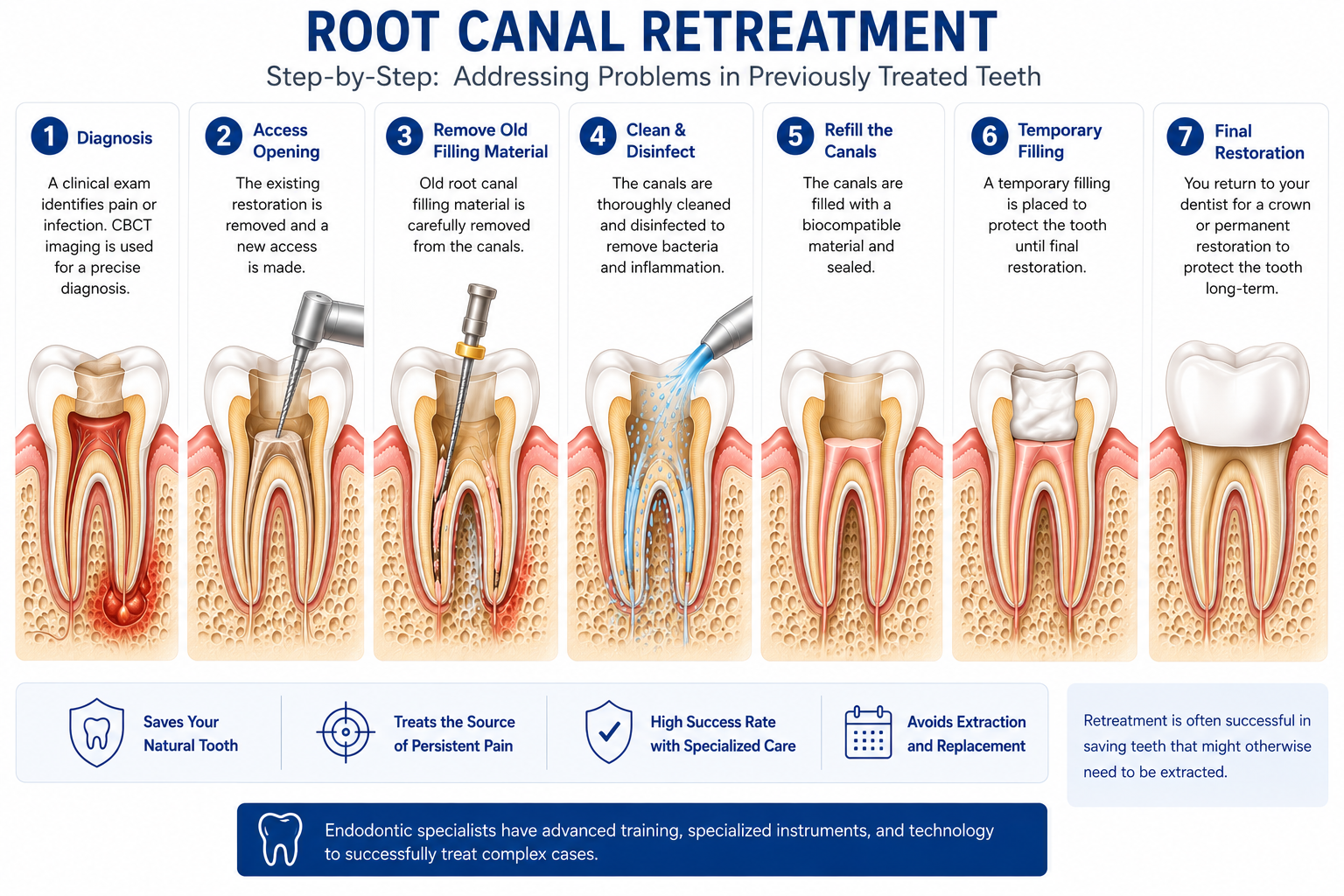
During endodontic retreatment, your endodontist will:
- Reopen the tooth to access the previous root canal filling.
- Remove the old filling material.
- Carefully examine the canals for missed anatomy, infection, or damage.
- Clean and disinfect the canal system.
- Refill and seal the canals.
- Place a temporary filling until your dentist completes the final restoration.
Why Choose an Endodontist?
Retreatment is often more complex than a first-time root canal. Endodontists have advanced training in diagnosing and treating previously treated teeth, including complex canal anatomy. At Endodontic Partners, our team uses advanced technology such as surgical microscopes and 3D imaging when appropriate to help evaluate and treat difficult cases.
Retreatment vs. Extraction
Whenever possible, saving your natural tooth is usually the preferred option. Retreatment may help preserve your natural bite, avoid tooth replacement, and maintain the surrounding bone and gum structure. If retreatment is not the best option, your endodontist will explain alternatives such as endodontic surgery or extraction.
Recovery After Retreatment
Mild soreness or tenderness is common for a few days after retreatment. Most patients return to normal activities quickly. It is important to avoid chewing hard foods on the treated tooth until your dentist places the final restoration.
Please Watch Educational Video on Endodontic Retreatment
Frequently Asked Questions About Endodontic Retreatment
Don't Give Up on Your Tooth
A failed root canal doesn't always mean the tooth needs to be removed. In many cases, endodontic retreatment can eliminate infection and preserve your natural tooth for years to come.
If you're experiencing pain in a tooth that has already had a root canal, schedule an evaluation with one of our experienced endodontists.