Root Canal Treatment in Baltimore, Lutherville-Timonium & Bel Air, MD
Expert Endodontic Care Focused on Saving Your Natural Teeth
A tooth that is infected or severely inflamed doesn't always need to be extracted. In many cases, root canal treatment can relieve pain, eliminate infection, and save your natural tooth for years to come. At Endodontic Partners, our experienced endodontists provide advanced root canal treatment using the latest technology to help patients throughout Baltimore, Lutherville-Timonium, Bel Air, and surrounding communities preserve healthy, natural smiles.
For more than 30 years, our practice has focused exclusively on endodontics—the dental specialty dedicated to diagnosing tooth pain and treating the inside of the tooth. Whether you've been referred by your general dentist or are seeking treatment on your own, our team is committed to providing comfortable, precise care in a compassionate environment.
What Is a Root Canal?
A root canal is a procedure that removes infected or damaged tissue from inside a tooth. The soft tissue at the center of every tooth, called the dental pulp, contains nerves, blood vessels, and connective tissue. When bacteria reach the pulp through deep decay, a crack, trauma, or repeated dental procedures, the tissue can become inflamed or infected, causing significant pain and placing the tooth at risk.
During root canal treatment, the infected pulp is carefully removed, the root canals are cleaned and disinfected, and the tooth is sealed to prevent future infection. In most cases, the tooth can then be restored with a crown by your general dentist, allowing you to keep your natural tooth and maintain normal chewing function.
Modern root canal treatment is designed to relieve pain—not cause it. With today's advanced techniques and effective local anesthesia, most patients find the procedure to be no more uncomfortable than receiving a routine filling.

Benefits of Root Canal Treatment vs. Tooth Extraction
Whenever possible, saving your natural tooth is the healthiest long-term solution. Root canal treatment removes infection while preserving the natural tooth, allowing you to maintain normal function and avoid more extensive restorative procedures.
Root Canal Benefits
- Preserves your natural tooth
- Relieves pain and eliminates infection
- Maintains normal chewing and biting function
- Helps preserve surrounding bone and teeth
- Often costs less over time than extraction and tooth replacement
- Can last a lifetime with proper care
While tooth extraction may be necessary in certain situations, replacing a missing tooth often requires a dental implant, bridge, or partial denture. For many patients, root canal treatment is the most conservative and cost-effective way to restore oral health while preserving a natural smile.
Why Might You Need a Root Canal?
Root canal treatment is recommended when the pulp inside a tooth becomes infected or inflamed and cannot heal on its own. Without treatment, the infection may spread to the surrounding bone and tissues, potentially leading to an abscess, worsening pain, or even tooth loss.
You may need a root canal if you experience:
- Persistent or severe tooth pain
- Lingering sensitivity to hot or cold
- Pain when biting or chewing
- Swollen or tender gums
- A pimple-like bump on the gums (dental abscess)
- Tooth discoloration following trauma
- A cracked or fractured tooth
- Deep decay extending into the pulp
Early diagnosis and treatment can often save the tooth and prevent more extensive dental procedures.
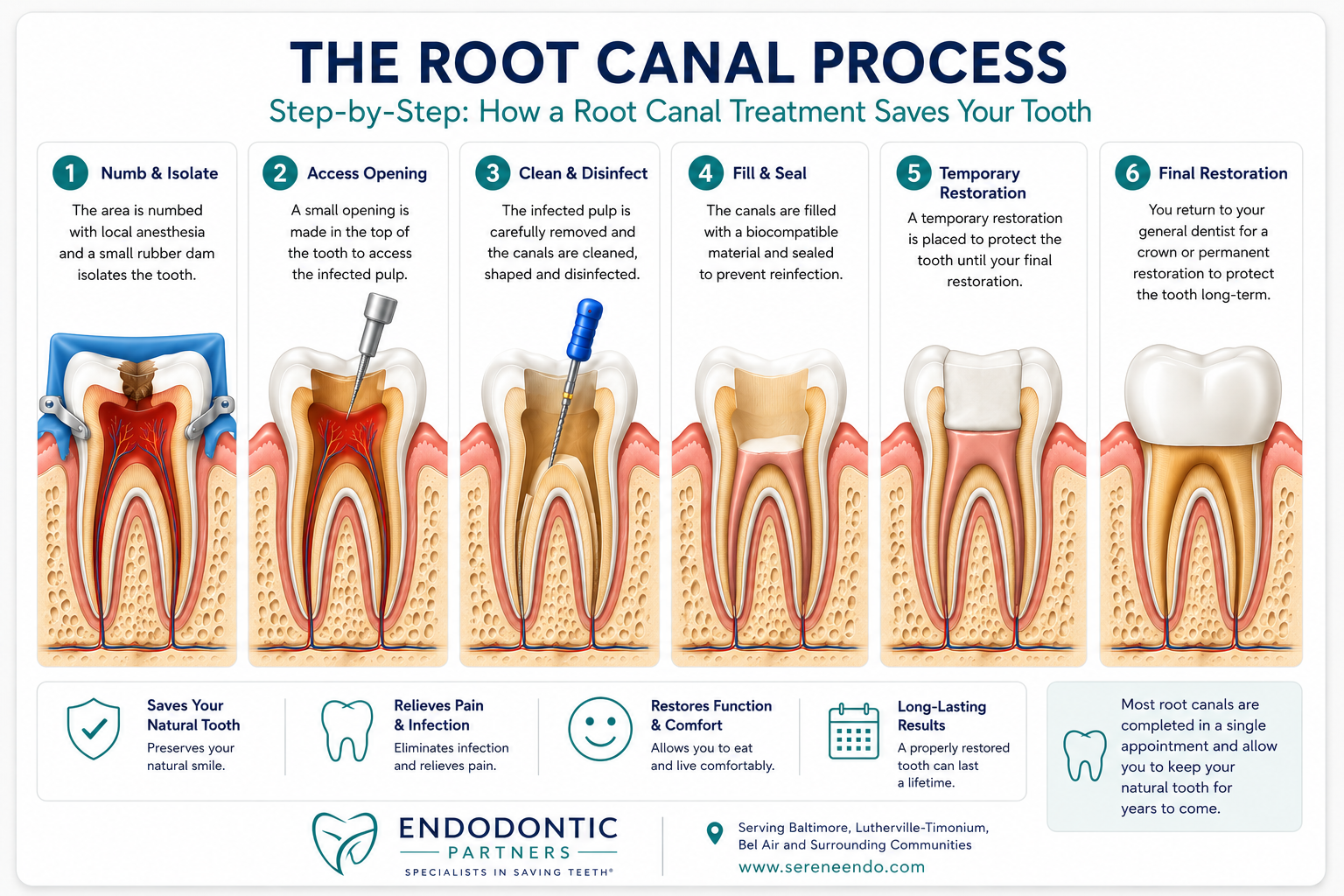
The Root Canal Procedure: Step by Step
Step 1: Exam and Diagnosis
We evaluate your tooth, review your symptoms, and use digital imaging to confirm whether a root canal is needed.
Step 2: Numbing the Tooth
Local anesthesia is used to keep you comfortable throughout treatment.
Step 3: Removing the Infection
A small opening is made in the tooth, and the infected or inflamed pulp is carefully removed.
Step 4: Cleaning the Canals
The root canals are cleaned, shaped, and disinfected to remove bacteria.
Step 5: Sealing the Tooth
The canals are filled and sealed to help prevent future infection.
Step 6: Final Restoration
After treatment, your general dentist typically places a crown or permanent restoration to protect the tooth and restore normal function.
Recovery & Aftercare
Most patients return to their normal routine the same day or the following day after a root canal. Mild tenderness or sensitivity is normal for a few days and can usually be managed with over-the-counter pain medication.
To promote healing after your procedure:
- Avoid chewing on the treated tooth until it has been permanently restored.
- Brush and floss as usual to keep the area clean.
- Take any prescribed medications as directed.
- Schedule your permanent crown or restoration with your general dentist.
If you experience severe pain, significant swelling, or your temporary filling comes loose, contact Endodontic Partners promptly for evaluation.
Why Choose an Endodontist Instead of a General Dentist?
While many general dentists perform root canals, endodontists are specialists who focus exclusively on diagnosing tooth pain and treating the inside of the tooth. After dental school, endodontists complete an additional two to three years of advanced specialty training in root canal therapy, complex dental anatomy, traumatic dental injuries, and microsurgical techniques.
Because root canals are the primary focus of our practice, the specialists at Endodontic Partners perform these procedures every day. This advanced training and experience enable us to diagnose challenging cases accurately, treat teeth with complex root canal systems, and manage situations that may require specialized expertise.
Our practice also utilizes advanced technology to improve precision and patient outcomes, including:
- Low-dose 3D Cone Beam CT (CBCT) imaging
- Dental operating microscopes
- Digital radiography
- Modern rotary instrumentation
- Electronic apex locators
Whether your case is straightforward or complex, our goal is to provide efficient, comfortable treatment while preserving your natural tooth whenever possible.
Frequently Asked Questions About Root Canal Treatment
Experiencing Tooth Pain?
If you have severe tooth pain, swelling, sensitivity, or were told you may need a root canal, our endodontic specialists can help evaluate the tooth and recommend the right treatment.